Every teacher knows that feeling. You just finished explaining something really well, students are nodding, everything looks fine. And then the test results come back and half the class clearly did not understand a single thing.
That gap between teaching and actual learning is exactly what formative assessment is meant to close. And it does not have to take extra hours out of your already busy day.
What Is Formative Assessment and Why Should Teachers Care
Formative assessment is any quick activity that helps you check student understanding while learning is still happening. Not after the unit ends. Right now. In the middle of the lesson while there is still time to actually fix things.
It is not about marks, it is about getting an honest picture of where each student actually is so you can teach better tomorrow than you did today. Most of these take under five minutes.
15 Formative Assessment Examples That Work in Real Classrooms
End of Lesson Learning Exit Response
Before students leave ask them to write one thing they understood and one thing they are still confused about. Two minutes and you have real data. You walk into the next class already knowing what needs more attention.
Short Classroom Understanding Check
A quick five question quiz at the end of class shows exactly which concepts are not landing. It does not need to be graded and does not need to take long either.
Individual Reflection and Partner Discussion Activity
Give students a question, let them think alone for sixty seconds first and then have them discuss with a partner. That solo thinking time stops the same three students from doing all the talking every single time.
Rapid Student Response Signal Check
Thumbs up if you got it, thumbs down if you did not. Ten seconds, instant read of the whole room. Simple but it genuinely works.
Brief End of Class Reflection Writing Task
Students write whatever is on their mind about the lesson. Reading these sometimes tells you more than a formal quiz ever would.
Student to Student Feedback and Revision Activity
Students swap work and check each others answers using a simple checklist. The student doing the checking learns just as much as the one receiving feedback. Most teachers dont expect that and it genuinely surprises them.
Independent Learning Support Toolkit for Students
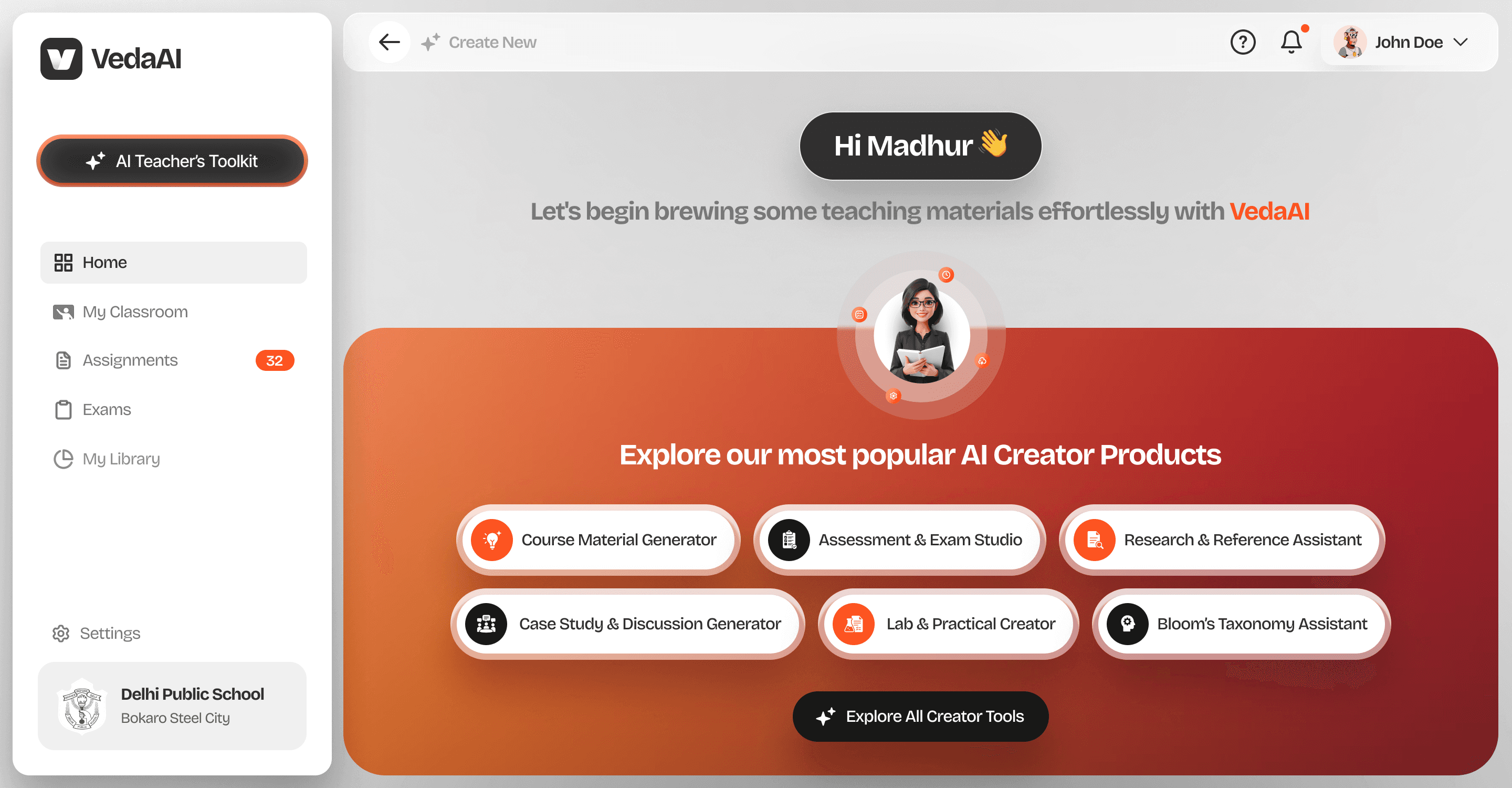
Some schools are using VedaAI to give students access to a built in Student Toolkit that includes an AI Notes Generator, an AI Tutor and an AI Doubt Solver. Students use these on their own between classes to revise, clear doubts and check their own understanding without waiting for the next lesson.
Whole Class Opinion and Understanding Poll
Everyone votes before the answer is revealed, that commitment makes students actually think rather than wait to copy whoever answers first.
Live Written Response on Personal Whiteboards
Students write their answer and hold it up at the same time. You scan thirty responses in seconds. Students enjoy this more than a normal quiz which is always a good sign.
Student Learning Reflection Journal Entry
A few lines after each class about what made sense and what is still unclear. Over time this becomes one of the most honest records of how a student is actually progressing.
Live Written Response on Personal Whiteboards
Ask students to draw how ideas from the lesson connect to each other. A messy unclear map often tells you more than a wrong answer on a test ever could.
Teacher Led Verbal Comprehension Check
Ask questions during the lesson but keep it low pressure. Say “What do you think so far?” instead of “What is the answer?” The reasoning behind a response tells you far more than whether they got it right.
Student Self Reflection and Progress Review Sheet
A simple form where students rate their own confidence on each topic and flag what they still need help with. Students are often more accurate about their own gaps than most teachers expect.
Picture Based Understanding Response Activity
Ask students to draw what they just learned instead of writing about it. A student who cannot draw the concept clearly usually has not fully understood it yet.
Error Spotting and Correction Practice Task
Give students work with mistakes already in it and ask them to find and fix the errors. Students who can explain why something is wrong have genuinely understood the topic and that is really the whole point.
Why Doing This Regularly Actually Changes Results
When small checkpoints happen regularly students stop treating everything like a high stakes test. They get more comfortable showing confusion and more willing to try difficult things.
Catching a misunderstanding in week two is very different from finding out after the final exam. That timing changes everything.
Formative assessment does not need to be fancy. It just needs to happen regularly. Pick two or three from this list and try them this week. What you discover about your students will surprise you.
And if the checking part is starting to feel like too much, tools like VedaAI let teachers create assessments quickly and get grading done by AI so there is actually time left to act on what the results are showing.
What is AI in schools?
AI in schools refers to the use of artificial intelligence to support teaching, learning, assessment, academic analytics, school management, and educational decision-making.
How can schools use AI effectively?
Schools should begin with clearly defined educational goals, implement AI gradually, support teachers through training, maintain human oversight, and continuously measure educational outcomes.
Can AI improve academic performance?
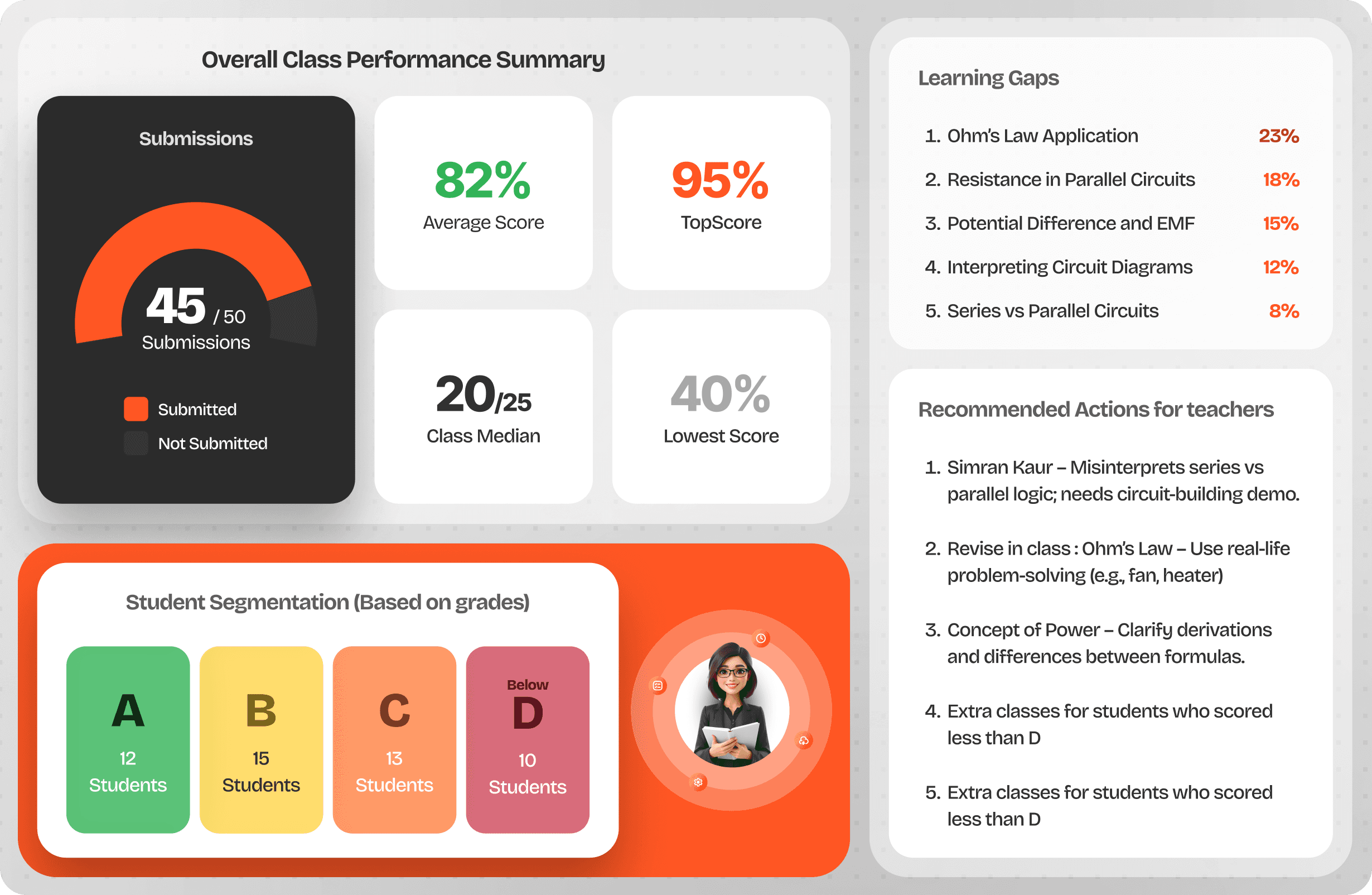
Yes. AI helps improve academic performance by identifying learning gaps early, generating personalized feedback, supporting teachers, and enabling data-driven academic interventions.
What are the benefits of AI for school leaders?
School leaders benefit from institution-wide academic insights, improved assessment data, better resource planning, enhanced teacher support, and stronger educational decision-making.
What is the biggest challenge of implementing AI in schools?
The biggest challenge is not the technology itself but implementing it strategically while ensuring teacher adoption, responsible AI use, and a clear focus on improving learning outcomes.